Showing posts with label Oscars. Show all posts

Tuesday, 23 March 2010

Recent Release Reviewed: A Single Man

There's a moment about halfway through A Single Man where George Falconer (Colin Firth) discusses his past relationships with his love Jim (Matthew Goode). As he discusses his previous affairs with women, George becomes increasingly flabbergasted about Jim's persistence that he always knew his own sexuality. George then says You know, that was the first thing that I noticed about you was how sure of yourself you were. Although the line represents the beginnings of change in society, it is also analogous to a description of the film's director, Tom Ford.

A Single Man, based on the novel of the same name by Christopher Isherwood, is the directorial début of Mr Ford, a man who, until recently, was more famous for his work in designer fashion. Outcries of 'vanity project' were made frequently when the film was announced. If there is one thing this film does well, it is in quashing these declarations. Mr Ford shows himself to be a very competent director as he and his cast recreate the looks of the early 60s in this tragic tale of lost love.

The film revolves around the plight of George Falconer after losing the love of his life, Jim, in a car crash. The narrative occurs eight months after the event. Apart from the odd flashback, the story is contained in one 24 hour period - at the end of which, George plans to commit suicide. Depending on how talky/action-packed you like your films, this already sounds like an intriguing or dull premise. This is not a film containing a lot of twists or plot devices. There are no cliffhanger moments, yet I was riveted throughout its running time. Why? Simply because I have not seen a film with such artistic and visual creativity play in a big business multiplex cinema for an incredibly long time.

First things first, many viewers and critics have focused on, as expected given the director's previous career, the wardrobe and sets of the film. Some have heralded the perfect and pristine nature of the costumes as, although beautiful, someone distracting. There is in fact one scene especially that hammers home this criticism which involves Colin Firth still looking perfectly and pristinely dressed whilst on the toilet. I appreciate this comments, but feel that they are secondary to some of the more serious criticisms against this film. Also, saying Mr Ford does not allow his characters to scruff up their clothes is silly. It just happens that his characters believe it important to be well dressed. My complaints with the wardrobe tie in with my complaints with the direction. Although it is wonderfully creativity, it is at times heavy handed. This is perfectly exemplified by the appearance of rent boy dressed exactly like James Dean. Not similarly, but exactly. He then tells George that people say he looks like James Dean. One or the other, the costume or the line, both is insulting to the audience in a manner similar to James Cameron's Avatar.
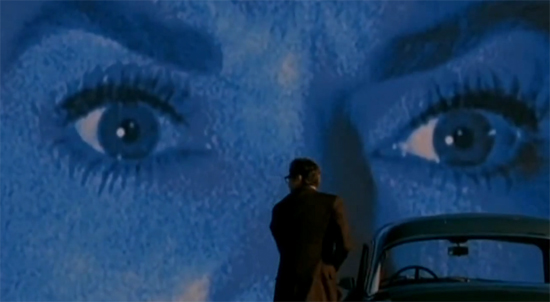

It is these sort of problems that plague A Single Man and, at times, threaten to consume it. Mr Ford has a stunning sense of composition, an enviable quality that I wish more directors possessed. Watching this film purely as a visual art is incredible. Within the opening 20 minutes, there are more elaborate and beautiful shots and visual motifs then I am likely to see in mainstream cinema for the remainder of the year. However, unfortunately, despite such a precise and nuanced start, the visual symbolism becomes increasingly heavy handed to an annoying degree. Even tricks that appeared subtle at the start of the film are rehashed, but all the grace is taken out. It is almost as if, at least in regards to cinematography, there were two directors supervising. One example of this is the everchanging temperature of the film. This is a simple trick utilised to display George's inner moods. When he is feeling despaired, the temperature of the film is lowered, which reduces the saturation. In contrast, when he is feeling renewed and human again, the warm tones of the picture return. Like I said, this is a blunt and obvious technique, however, at first, it is performed with the utmost subtlety, in an almost blink-and-miss-it fashion. As the film progresses, this becomes more and more pronounced which left me feeling insulted. I don't know whether Mr Ford was attempting to highlight the exaggerated fractious temperament of George, but if so, there are better and more varied methods to present this. If there is one complement for this technique, it always it utilised with the confidence alluded to in the dialogue of the first paragraph. Mr Ford may be annoying us with the brash handling of this symbolism, but he seems fully in control of the picture.

Despite this, things are not all doom and gloom. Not only does Mr Ford present more visual ideas in one film than Michael Bay is likely to show in his lifetime, but he shows himself as being quite apt in directing actors. This is no doubt helped by the calibre of performers in this film (believe me, Colin Firth deserved the Oscar nomination at the very least). Aside from the sublime lead performance, the three main supporting roles are all filled by three highly talented professionals. Julianne Moore again highlights why she is such a revered actress playing George's ex-lover and long term friend, Charley, a hip but deeply wounded and distressed woman. Likewise Matthew Goode presents possibly the best performance of his film career so far. Hopefully he will continue to work on projects like this - he plays American very well, unfortunately the same cannot be for his Irish and pseudo-Germanic. Even on paper, Nicholas Hoult is the weak link in the leading players, however, looking at the talent on hand, there is no shame in this. Fortunately for him, he presents a fine performance, one that, if rumours are to be believed, may have improved had he had further time to prepare. Giving him the benefit of the doubt, his performance ranges from adequate to good. His earlier scenes are unfortunately a bit flat, however, the intimacy he brings to the final section of the film provides a wonderful contrast to the restrained George.
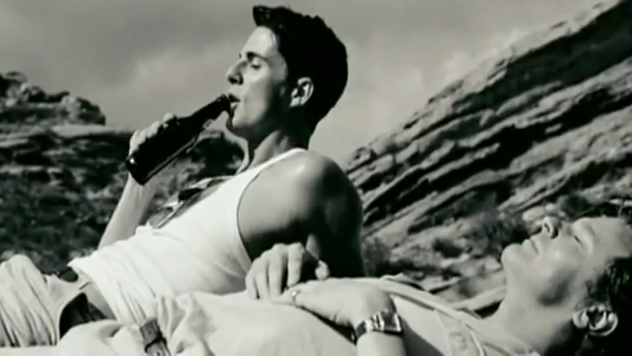

Final thoughts: A visual tour-de-force for the first 20 minutes, but even though the images falter, the acting is enough to keep one fully entrenched in the quiet story unfolding about one man's grief. I look forward to Mr Ford's follow up feature, whatever it may be.

7/10

Saturday, 20 March 2010

Recent Release Reviewed: The Hurt Locker

The Hurt Locker
Starring: Jeremy Renner, Anthony Mackie, Brian Geraghty, David Morse
Screenplay: Mark Boal
Director: Kathryn Bigelow

"You're a wild man! That's a wild man answer!"

I'm going to have to admit that I didn't manage to see The Hurt Locker at the cinema. We rented it, on Blu-Ray at least, but we didn't exactly get the big screen experience. So it serves as a testament to the film that I was as gripped as I was.

As the film starts a small bomb disposal team in Iraq, comprised of Sergeant JT Sanborn (Anthony Mackie) and Specialist Owen Eldridge (Brian Geraghty), have to adjust to their new team leader, Staff Sergeant William James (Jeremy Renner). James doesn't seem too preoccupied about treading on his new colleagues' toes, filling the shoes of his dead predecessor, and especially following protocol. Sanborn and Eldridge look on as James takes increasingly bigger risks, endangering not only his own life but theirs as well.

I watched this film shortly after The Hurt Locker swept the Oscars, winning Best Picture, Best Director, and Best Screenplay. Well, looking at the competition, at least the first two honours are justified. It's been a long time since Kathryn Bigelow's last effort K-9: The Widowmaker, but I've always been a big fan. Near Dark, Point Break, and the underrated Strange Days point all showed that Bigelow was a very talented filmmaker. Here she puts the viewer right into the sweat, dust, claustrophobia, and tension. As the film moves from set-piece to set-piece there's barely any room to take a breath. The team's first leader is shown to be funny, easy-going, and has a great rapport with his men. As we see, none of these qualities will stop you getting killed.

The cast is largely comprised of, if not unknown, then lesser known actors. Geraghty played a similar role in Sam Mendes' misjudged Gulf War drama Jarhead, but has much more to do here. Mackie is more familiar, having put in good work in films like Half Nelson, and gives another solid performance here. There are brief but effective cameos from Guy Pearce, David Morse, and Ralph Fiennes. The best work, of course, comes from Jeremy Renner, making the most of a leading role. His turn as James manages to take the strikingly different aspects of the character and pull them together. At one moment he seems to be caring, almost nurturing, towards his team. He has a wife and small child at home. But at the same time he continually puts himself in harm's way, beyond what the job calls for. At times he seems to be pushing himself towards a fiery death, then his survival instinct kicks in just in time.

Compared to other films based on and around the war on terror, The Hurt Locker is miles ahead. The mission statement seems to be putting you right where the action is, and the danger. Unfortunately, the closest point of comparison would be David Simon's superb HBO miniseries Generation Kill, which had the benefit of a much longer running time to fill in details and acquaint you with the characters. They do both have the same attitude towards the politics of the war, which is when you're on the ground facing death, politics is the last thing on your mind.

Of course, with all the hype surrounding the film it's impossible that it could actually match up. It's a little overlong at over two hours, and it does sometimes drag in between the set-pieces. But what set-pieces they are. When Bigelow turns up the tension, you'll find yourself at the edge of your seat. Compared to Avatar? The Hurt Locker wins every time.

8.5/10

Monday, 8 February 2010

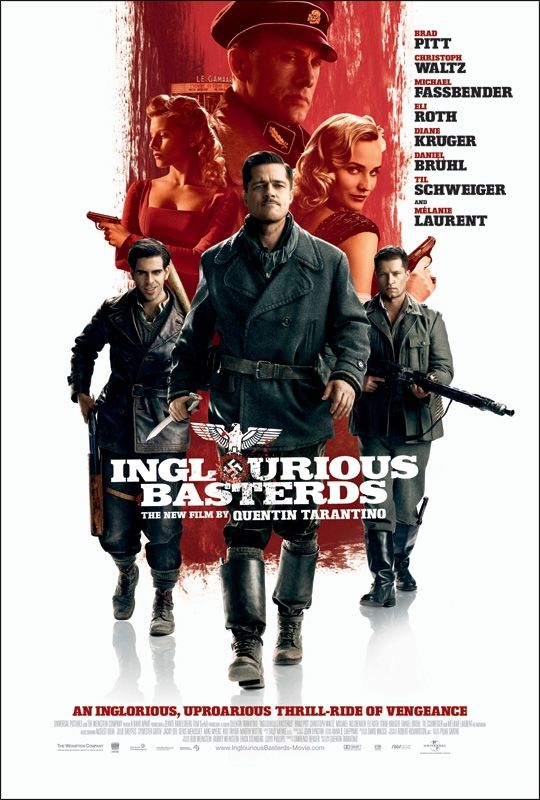
Recent Release Reviewed! Inglorious Basterds


INGLORIOUS BASTERDS
Starring: Brad Pitt, Mélanie Laurent, Christoph Waltz, Michael Fassbender, Diane Kruger, Eli Roth
Written and directed by: Quentin Tarantino

It’s difficult to write a review of Inglorious Basterds that isn’t highly opinionated. In fact, it seems to be a film that’s divided audiences and critics alike, with some hailing it as Tarantino‘s masterpiece, and others calling it a disjointed, uneven mess. But everyone has an opinion, and here’s mine.

The film starts by introducing Christoph Waltz’s “Jew Hunter” Hans Landa. He coolly interrogates a French farmer hiding a Jewish family under his floorboards, and orders his men to blast the floor, and the family, to smithereens. Only teenage Shosanna (Mélanie Laurent) escapes. Next we’re introduced to the Basterds themselves, led by Lt. Aldo “The Apache” Raine (Brad Pitt). Raine and his eight soldiers are to be dropped into Nazi-occupied France and scare the hell out of the Germans. Specifically, each of the Basterds must collect a hundred Nazi scalps. Slowly, a plot begins to develop, as Shosanna, now the owner of a cinema, meets a young German soldier named Frederick Zoller (Daniel Bruhl), who has become a film star after killing three hundred Americans in Italy. Zoller is smitten with Shosanna, and convinces Josef Goebbels to host the premiere of the film about his exploits in Shosanna’s theatre. Goebbels agrees, and Landa is assigned to handle security for the event, which Hitler has now decided to attend. The German film star Bridget Von Hammersmark (Diane Kruger) hears of the change of venue, and informs the British, who send Lt. Archie Hicox (Michael Fassbender) to rendezvous with Bridget and escort her to the film premiere, Basterds in tow. Meanwhile, Shosanna has no intention of any Nazi leaving the cinema alive…

First off, this is not a film about a group of Jewish-American soldiers behind enemy lines in World War II. We rarely see the Basterds at work, and, in his idiosyncratic way, Tarantino has made his team of hardened killers more of a comedy troupe. Pitt’s Raine is a collection of odd tics and gurning that only works once throughout the entire film, while “Bear Jew” Donny Donowitz is played by Hostel director Eli Roth, who admittedly acquits himself onscreen better than Tarantino ever did. Aside from a brutal beating, Donny is largely a comic figure, as are the rest of the Basterds, played by actors like B.J. Novak (the American The Office) and Samm Levine (Freaks and Geeks). Special mention must go to Til Schwieger’s wonderfully psychotic Sgt. Hugo Stiglitz, an enlisted German soldier who killed eight S.S. officers, and has his own Shaft-esque theme and flashback sequence. Waltz has received a lot of praise for his depiction of Landa, and deservedly so. Charming, odd, and terrifying, Landa is a force to be reckoned with. Also on form are Fassbender as the very English Hicox, and Kruger, showing unsuspected talent as the glamorous Bridget. Less successful is the use of Mike Myers as a British General, whose accent veers uncomfortably towards Austin Powers territory. But then again, is that part of the joke?

The real star of the film, however, is Mélanie Laurent. Her performance has gone largely overshadowed by Waltz’s, but her turn as the revenge-fuelled Shosanna is faultless. Around halfway through, when it ecomes clear that Tarantino is going as slow as he wants to, she works wonderfully with Bruhl’s brash Zoller. She also keeps some otherwise very tedious scenes interesting. I've only seen her in bit parts in films like The Beat That My Heart Skipped and Paris, but on the basis on her performance here she deserves more leading roles.

The biggest problem with Basterds is this: whenever the film threatens to pick up any momentum, the focus shifts. What should be a fantastic scene with the Basterds is told in flashback, intercut with a very tedious scene of Hitler throwing a hissy fit that isn’t as funny as it thinks it is. Critics have complained that Landa is missed when he’s offscreen, but he could actually have done with missing a couple of scenes. Once we’ve seen his switch from affable to menacing twice, it’s not as effective anymore. The Basterds aren’t in the film enough for us to care what happens to them (indeed, some are killed offscreen). The exception to this is Donny and Ulmer, who have a hilarious double act at the end of the film, by which point we’re all in on the joke. Indulgences are fine as long as you keep the momentum up. Basterds trips up several times thanks to Tarantino's apparently blind self-confidence.

No matter how you feel about Tarantino as a director, his films are always identifiably his own. Here, his stamp is as present as ever. Sometimes it works (the Stiglitz cut scene is hilarious), sometimes it doesn’t (do we really need an explosion explained to us?). The film drags most when we are introduced to the German high command. Then again, some scenes are just as good as you’d hope, particularly the blood-bath rendezvous gone wrong at the Inn.

Most people’s defence of the film as a whole seems to be comparing it to pop art. It’s garish, broad-stroke and a mixture of different styles thrown into one over-long film. It fails just as often as it succeeds. And Tarantino’s joke seems to be one of the biggest problems for the film. Whether or not you appreciate the joke will affect your enjoyment of the ending. It’s not always funny , and it doesn’t always work. But by the blood-soaked, Bowie-scored finale, you’ll either be laughing hysterically, or you’ll wish you already left. I was laughing.

As for Oscar talk? Well, to be honest, the only really deserving candidate is Christoph Waltz. Tarantino’s screenplay is fun, but by God, the man needs someone to tell him no sometimes. And there are more deserving candidates for the best director prize. It's definitely worth a watch, however. It is clever, funny and, for the most part, well acted. Just be prepared for some dead scenes in between some geniunely electrifying sequences.

7/10

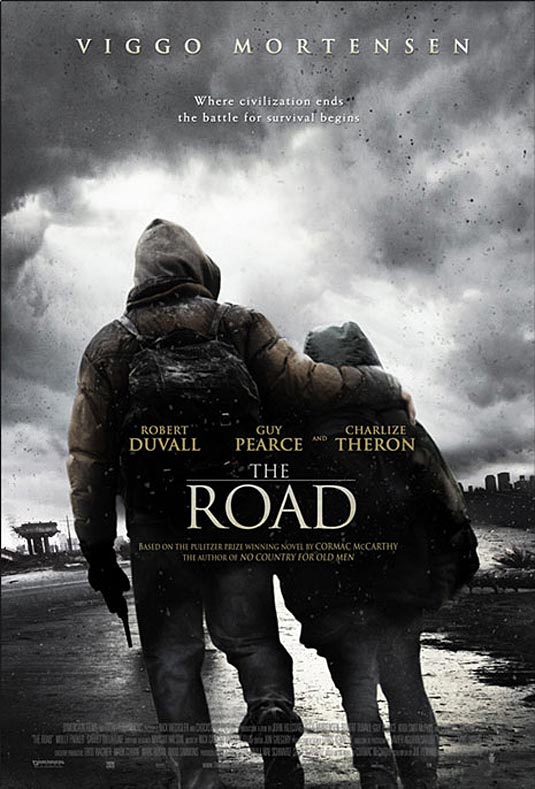
Recent Release Reviewed! The Road


THE ROAD

Starring: Viggo Mortensen, Kodi Smit-McPhee, Charlize Theron, Robert Duvall, Guy Pearce
Screenplay: Joe Penhall, based on the novel by Cormac McCarthy
Directed by: John Hillcoat

I've been waiting for The Road for a long time. I remember when it was announced, several years ago now, that The Proposition director John Hillcoat would be adapting the bleaker-than-midwinter novel into a film, and how excited I was. Things seemed to get better as the casting was announced: Viggo Mortensen as the Father! Robert Duvall as The Old Man! Guy Pearce as The Veteran! The cast was nicely rounded out by HBO character actor regulars Garret Dillahunt (Deadwood) as The Gang Member, Michael K. Williams (The Wire's Omar) as The Thief, and Molly Parker (also Deadwood) as Motherly Woman. I was midly surprised that Charlize Theron had signed on as the Mother, as she appears very briefly in the book. I had misgivings about the plans to expand her part, and when I discovered that the Weinstein brothers were involved in the making of the film. Then the delays started.

I got more worried when I saw the trailers. In the Weinstein's defence, The Road is a tricky film to market. Yes, it's a father and son bonding film...with cannibals. It's a gritty post-apocalyptic movie....where the violence is offscreen, and it's never clear what happens, and the Father shoots one person throughout the whole film. Anybody looking for I Am Legend can look elsewhere. The film moves at a slow pace, dwelling on the sheer bleakness (there's that word again) of the situation.

A quick run of the plot, such as it is: There has been an apocalyptic event, and the world is dying. Most of the human population are dead, and those that have survived are almost entirely savage and cannibalistic. Through this dead wasteland move the Father and his Son. The Father has pledged to get the boy to the coast in the south, but first they have to survive, struggling to find food and shelter and dodging roving gangs. Haunted by the memory of his wife, he forces himself to keep going for his son. But is there any point to his mission? And will they make it that far?

It's very episodic in structure, much like the book. The incidents occur when the two leads meet other people, and it must be said that the tension is somewhat lacking during the intermediate scenes. Why The Road works so well, then, is because of Mortensen's frankly stunning performance, and his chemistry with Smit-McPhee, who plays his son. We are told a lot on brief flashbacks about how the Mother abandoned the two of them, choosing death over survival, and how committed the Father is to protecting his son. "We carry the fire," he tells him. They are the good guys, and the good guys must keep going. It's heavy going, though. Good memories are killers, they tempt you to give up and simply mourn what you've lost. The key is to keep going, never stop anywhere too long. There's a wonderful quiet scene when the two find a bunker full of tinned food and drink. The father enjoys a glass of whiskey and a cigarette, and the boy stares at him uncomprehendingly. This is what his father looks like when he's relaxed.

The incidents that occur are superbly acted. Dillahunt is wonderfully odious, slurring promises and threats through stained and broken teeth, while Duvall pops up near the end as the old man Eli, who doesn't think about death because there's no time for luxuries. Pearce is good, but it should be mentioned his role is little more than a cameo, despite what the poster says. Theron is also excellent as the Mother, unafraid to be unsympathetic in the role that is the other side of the coin from Mortensen's. Hillcoat also uses these scenes to remind us just how dangerous the world has become. The scene in which the father and son enter a house only to discover something horrible in the cellar is just as tense as it was in the book.

The most consistent criticism of the film seems to be that it sticks to closely to the book, rendering it episodic and unnecessary. While this may be a valid criticism, the film definitely holds up on its own. Hillcoat creates stunning burnt-out landscapes, and the performances are excellent. Mortensen deserves an Oscar for his work here, and didn't even get a nomination. It's beautifully scored by Nick Cave and Warren Ellis. As for the issue of being too close to the book, the double edge sword implied is frankly cruel. Penhall has done a very good job adapting the book, and the added scenes of the Mother work far better than I expected. If too much had been changed, McCarthy fans (and they are legion) would have been up in arms.


The Road isn't perfect, but it's an excellent adaptation of a stunning book. It's something of an emotional endurance contest, but it's definitely worth it.
8/10


Sunday, 7 February 2010

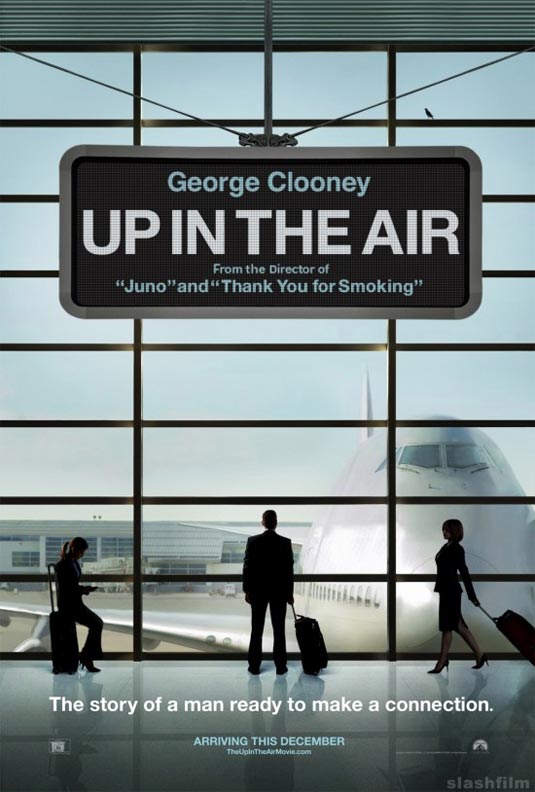
Recent Release Reviewed! Up in the Air


UP IN THE AIR

Starring: George Clooney, Vera Farmiga, Anna Kendrick, Jason Bateman
Screenplay: Sheldon Turner, Jason Reitman, based on the book by Walter Kirn
Director: Jason Reitman

"Some animals were meant to carry each other, to live symbiotically over a lifetime. Star-crossed lovers, monogamous swans. We are not swans. We're sharks"

Jason Reitman's one of those directors who seems to making films that get attention for other people involved. Thank You For Smoking, arguably still his best work, is the film that got Aaron Eckhart the attention he deserved after about 10 years of excellent performances. Juno, of course, became the launch pad for Ellen Page and Diablo Cody. Not too many people noticed the warmth of the Juno's colour palette, or gave Reitman a lot of credit for getting such wonderful turns from his cast, or indeed, getting the cast in the first place. In fact, look at the Thank You For Smoking cast: Eckhart, Sam Elliott, Robert Duvall, Maria Bello, etc. Impressive cast for a first-time director, even his dad did make Ghostbusters.

Up in the Air is another movie which places his cast front and centre. It's getting George Clooney a lot of attention, and deservedly so. The film has one of his best performances, a nuanced, careful spin on the classic "Clooney" persona which gradually crumbles as the film makes it's way towards its end. While the lead may not seem a million miles away from TYFS's Nick Naylor, Clooney gives the character a fragility that Eckhart's Yuppie Mephistopheles didn't have. It also has excellent work from relative newcomer Anna Kendrick, the radiant Vera Farmiga, a studiedly unlikeable Jason Bateman, and nice little turns from character actors JK Simmons, Melanie Lynskey, Sam Elliot, Danny McBride, and, surprisingly enough, Zach Galifianakis. But it also shows that Reitman is continuing to grow as a director. While tonally there is little different here from his previous work, there's an emotional depth that balances the glib humour.

Clooney plays Ryan Bingham, who works for an Omaha firm that fires companies' employees for them. Bingham's job means that he flies all over the country and has no home life or real friends to speak of. His life is made up of collecting air miles and credit cards, and makes extra money giving talks on his "take only what you can carry" mantra. He's a non-presence in his family's life, and has to be trapped into talking to his sister on the phone. The only other person in his life is Alex (Farmiga), another person who spends their time traveling, who tells Ryan to "think of me as you, but with a vagina". Things change when his boss Craig (Bateman) hires Natalie Keener (Kendrick), a smart young woman with a plan to do all firing over the internet, meaning that Ryan would never leave Omaha again. When he tries to convince Craig that Natalie is wrong, Craig tells him to take Natalie with on his next few jobs to show her the ropes. Natalie sees that firing people isn't as easy as just reciting a few stock phrases.

I haven't heard any negative reaction to Up in the Air, and I don't really see anything wrong with it. It's very well acted, as previously mentioned. It's fantastic to see Vera Farmiga in a role that doesn't require her to be a drug addict or be chased around by a murderous child. She's very funny here and sparks off Clooney and Kendrick wonderfully. Kendrick is also one to watch. The dialogue is just as sharp as you would expect, finding humour in the more emotional moments and allowing the actors to find a little depth during the more humourous scenes. While Reitman invested Juno with a warm colour palette, full of oranges and reds, Up in the Air is a much colder film. Blues and greys are the order of the day. Sticking with the same production team as his previous two films, the director manages to make Up in the Air a Jason Reitman film while establishing it's own identity. Not an easy task.

The theme is, of course, very current with massive lay-offs happening all over the world. It comes as a surprise to learn that Reitman considered making this before Thank You For Smoking. The lay-off scenes are handled very well, as the film uses real people who had lost their jobs for quick soundbites (a technique that is frankly over-used by the end), and character actors for longer scenes, such as Galifianakis and Simmons. Simmons especially reminds us of his range, as his rage subsides thanks to Ryan's expert handling. The scenes also serve to remind us of the film's main theme, showcase Clooney and Kendrick, and give the film it's main dramatic weight. When one fired woman tells Natalie calmly, and in detail, that she's going to kill herself, it doesn't feel forced or like it was done simply for dramatic effect.

Things do threaten to go off the rails in the last third, when Ryan realises that perhaps his life philosophy is keeping him at arms length from what life actually has to offer. Up to this point he's been wonderfully set in his ways, and the sudden shift does feel slightly forced. He decides to ask Alex to his sister's wedding. Once there, he finds himself having to give Jim, the groom-to-be, (Danny McBride) a pep talk on why he should get married. At this point, the film is at a tricky crossroads. It does make the right turn, thankfully, and we are spared anything to treacly. This is largely, again, thanks to the performances. Clooney walks the tightrope of a man struggling to cling to his narcissism with a lot of skill, and the casting of Melanie Lynskey and Danny McBride as a couple is fantastic. Nobody does terrified happiness bordering on hysterical tears better than Lynskey, while McBride does well-meaning blue-collar very well.

I would recommend Up in the Air to everyone. It's clever, funny, well-acted, well-shot. While it does threaten to move towards sentimentalism, the message of the film is an effective one: keeping people at arm's length leads to isolation and loneliness. Oscar hype is much deserved. It may not be as flashy as some of the other films competing, but for anyone looking for an excellent drama, look no further.
9/10

Friday, 29 January 2010

Recent Reviews Return!

Well, it's been a long time since our last post.
Too long.
But we're back, with more determination to chronicle our favourite things to watch, listen to, and look at than ever! Our proper 2010 reviews will start soon, but for now here's a brief round-up of three films that caught everyone's eye over the Christmas break. Let's start with the best of the three. Let the wild rumpus start!
Where the Wild Things Are

We were all wondering how Spike Jonze was going to turn one of the best-loved (and shortest) children's books of all time into a full-length feature. Well, with great care, skill and affection is the answer. The film starts as Max (Max Records) builds an igloo outside his house. He starts a snowball fight with his older sister's friends to get their attention, but in the ensuing melée the igloo is destroyed. Tearful and humiliated, Max wrecks his sister's room. When his mother (Catherine Keener) returns home, she scolds him but forgives him, and Max's mood improves. The following night, Mom doesn't pay enough attention to him while cooking dinner for her new boyfriend (a blink-and-you'll-miss-him Mark Ruffalo), and Max acts out. When Mom yells, Max runs out of the front door.

After crossing a great sea, Max lands on an island and meets the Wild Things. After convincing them not to eat him by telling them he's a King, he becomes their leader. He promises that he will help them build a fortress that will keep out feelings of sadness. But how long does he hav
e before they realise that he is not in any position to promise total happiness?

There really is a lot to love about Where the Wild Things Are. It's nice to see a Jonze film that embraces beautiful landscapes as opposed to claustrophobic rooms and corridors. As the wild things run riot through the forests, pulling up trees and hurling mud-clods, it's easy to forget that this is the man who brought us the cramped, wet portal into John Malkovich's brain. The wild things themselves are also a triumph. Surprisingly emotive, you never question the reality of these creatures. This is helped enormously by the incredibly strong voice cast. Each of the wild things represents a characterstic, and the actors are chosen accordingly. The cast of voice-actors is superb, with James Gandolfini (short-tempered Carol), Catherine O'Hara (bitter Judith), Lauren Ambrose (kindly KW), Forest Whitaker (good-natured but slow Ira), Chris Cooper (sensible Douglas), and Paul Dano (whiny Alexander). It's also worth noting just how good Max Records is as Max. The character isn't always sympathetic, he's often bratty, making him just like a real little boy. His interaction with Carol is especially superb, as Max recognises aspects of himself, which is both exciting and scary.

There has been some concern over how scary the film is. Well, there is a strong element of danger but nothing too much for children. I don't think it's just me whose fondest memories of the films watched as a child are those films that had a scary aspect to them. These moments are balanced with moments of humour and moments of touching emotion. Jonze and his team have succeeded in making the wild things recognisably human, despite their rough exteriors. It's a triumph, and enough to make you want to howl in appreciation.


Next up,
Sherlock Holmes
Which is, of course, Guy Ritchie trying to prove that he can make a film about something other than London gangsters. The choice of director seems odd, and frankly a lot of other filmmakers could have done a better job of it, but it's entertaining enough. He's helped no end by Robert Downey Jr. in the title role and a surprisingly good Jude Law as Watson. Their dialogue deliberately recalls Withnail and I, and there are few actors who can do verbosely sozzled as well as Downey Jr. The plot is a fun mix of the supernatural and procedural, making good use of the lamp-lit London sets. Come to think of it, lamp-lit late-1800s London sets always look good.
Even From Hell got that right. The plot is nothing too complicated: Evil Lord Blackwood (an under-used Mark Strong) is put to death for sacrificing young women for godless, wicked purposes. He promptly rises from the grave, and it's up to Holmes and Watson to stop him from completing his murders and his nefarious plan. Rachel McAdams fares well as tricksy love-interest Irene Adler, and Eddie Marsan lends some needed grit as Inspector Lestrade.

So, what's gone wrong? Well, for one thing, Ritchie's need to place his visual stamp on the film gets irritating fast. When Holmes narrates a forthcoming beating in the opening minutes in slow-motion, before putting it into effect in regular speed, it's a neat gag. When it keeps happening, the novelty has gone. And bare-knuckle boxing? Really?

While Downey Jr.'s accent does tend to wander, it's such a mannered performance that it
somehow works. But as the plot moves towards its conclusion, a sense of urgency is lacking. Blackwood is kept offscreen for much of the movie, and Strong is effective enough when he appears that we miss him when he's gone. Try and remember exactly what he was trying to do after you leave the movie, though. Meanwhile, Hans Zimmer's score strives for wacky and kooky but ends up being intrusive.

All that being said, it's entertaining enough. The two leads have a good chemistry, they're given good dialogue to work with, the supporting cast is pretty solid and there's some nice detail in the production design. It's just a shame it was given to Ritchie to direct.


Finally, there's

Avatar
I wonder if I was ever going to like Avatar. I wanted to in the beginning, before all the hype. I will admit I was one of the naysayers when the first trailer arrived, and everything I heard after that reinforced my belief that it would be a disappointment. After seeing it in 3D IMAX, my opinion stayed the same. It's a wasted opportunity

Now, my blog co-author and I agree that, if you are going to see Avatar, you should see it in 3D at the cinema. It certainly looks good. But, having seen My Bloody Valentine and Coraline at the cinema, I'm familiar with 3D movies. I realise that Avatar fans would probably be upset at hearing the film mentioned in the same breath as MBV3D, but, honestly, I enjoyed the slasher movie more.

The plot, such as it is, is the story of Jake Sully, a paraplegic ex-marine who is called to Pandora to replace his identical twin in the Avatar program, which allows humans to walk around the planet's poisonous surface while looking like the native race, called the Na'Vi. Sully's supposed to be giving the military a way in so they can mine the precious Unobtanium (Yeah. I know.), but falls for beautiful Neytiri, and decides to join forces with the natives to keep the evil soldiers from destroying the beautiful home world

So, yes the film looks good. Great, even. Eye-popping colours, visuals, and you feel like you're there, for some of the scenes at least. But my problem with the film was with the plot. If you want to be kept on your toes by a film's narrative, skip this. At no point during the long running time are we in the dark about what's going to happen in the next ten, even fifteen minutes. Is Sully going to fall in love? Is she going to love him back? Is Sigourney Weaver's gruff, smoking scientist going to warm to Sully after some early insults? Are the marines going to stab him in the back?

Sam Worthington is one of those actors who seems to be given the "star of tomorrow" tag, even though this is his second big blockbuster after Terminator Salvation. He was the best thing in that film, and is solid here too, although his American accent frequently slips. Zoe Saldana is great as Neytiri, all primal fierceness, while Weaver does well in one of the better-written parts. There's also a surprisingly good turn from Michelle Rodriguez in the under-written "Bad-ass chick" part of Trudy. Of course, the baddies have all the fun, as Giovanni Ribisi does oily glibness as company man Selfridge and Stuart Lang hams it up as the ruthless Colonel Quartich.

I can't call Avatar a disaster, and I can't call it a masterpiece. It just is, really. Some of the sequences are amazing, visually. But the predictability issue, the bad script, it all just makes it as hollow as a video-game cut-scene. As a film, it seems to exist purely for Cameron to develop this new technology. The last time that happened was with The Abyss, a similarly over-long movie, poorly written about misunderstood creatures and military bad guys in an unfamiliar world....at least that had Ed Harris.


It's now the top grossing film of all time, so I suppose this opinion doesn't really count for much! Maybe we'll be the tip of the backlash spear!

We'll be back soon with more recent reviews, lists, and rantings and ravings!

Wednesday, 25 November 2009

Recent Release Reviewed!!!! An Education


An Education


Director: Lone Scherfig
Screenplay: Nick Hornby
Based on the memoir by Lynn Barber


We complain a lot about the state of British cinema. And the state of British television, but that's for another time. Let's face it, we do have a lot to moan about. One of the most frequent complaints is our apparent addiction to that fluffiest of sub-genres: The period costume drama. Now, it's arguable that An Education is very much in that vein. It's certainly drama, the actors are wearing period clothing, drive around in vintage cars, and yes, it's definitely set in the early sixties. Oh, and it stars such seasoned veterans as Emma Thompson, Olivia Williams, and Alfred Molina.


But the whole enterprise has a wonderful sense of energy and vigour to it. This is in no small part due to the performance from Carey Mulligan in the lead role of Jenny. Jenny is in her final year at school, studying hard for her Oxford exams under pressure from her parents Jack (Molina) and Marjorie (Cara Seymour). One day she meets David (Peter Sarsgaard), a suave older man who gives her a lift. David quickly introduces her into a world of wealth and, perhaps most importantly, fun. Before long Jenny is going to Oxford, and even Paris. Her parents are far from unsusceptible to David's charms, and are easily won over by his charisma and apparent connections. But even as things seem to be going perfectly, Jenny slowly realises that David may not be quite who he says he is. Soon she has to choose between a chance at Oxford, and the glittering world David may be able to provide.


I must admit that, no matter what Carey Mulligan does, I will always see her as Sally Sparrow from the fantastic episode of Doctor Who, Blink. She was fantastic there and she's fantastic here, giving Jenny the right mix of innocence and intuition that allows her to look beyond the less pleasant realities of David's way of life in order to keep exploring the world he offers. Jenny does occasionally run the risk of becoming unlikeable; she's a little pretentious, but also genuinely insightful. But we keep rooting for her largely because of Mulligan's wonderful performance, and because, to paraphrase a Kramer quote from Seinfeld, her "unbridled enthusiasm".


Coming back to that period costumed drama theme, one big difference is the casting of Peter Sarsgaard as David. The actor is undoubtedly talented, and while it seems a little strange to cast an American as the male lead, he works. His accent wanders a little, but for the most part he's excellent; narcissistic, smooth, but also desperately insecure. He also plays well off Dominic Cooper (who would have been pehaps a more obvious choice for David, given his looks) and Rosamund Pike, who play his companions. Cooper shows some range as the David's "business partner" Danny, who's more frank about their work. Pike is especially hilarious as the dimwitted but affable Helen, who pleads with Jenny not to go to Oxford because she'll become "spotty and speccy". She also gets to wear some wonderfully garish costumes, contrasting with the grey and brown that permeates the world that Jenny's become used to. In Scherfig's film, Twickenham is a grey, rainy dead end. Jenny dreams of Oxford and Paris, and, accordingly, the director shoots the two cities as sunny, dreamy heavens.


A review of An Education wouldn't be complete without a few gushing sentences praising Alfred Molina's performance. The scenes that he shares with Mulligan the underrated Cara Seymour are wonderfully written and performed. We are quickly convinced that the last push towards Oxford is what Jack has been waiting for since Jenny was born, and the pressure he puts her under comes entirely from love. But he's also more than willing to accept David as his daughter's suitor, as he believes he can take care of her financially. He's as excited as Jenny by the dashing David, with his expensive cars, Goonies impressions, and connections. Cara Seymour is superb as Jenny's more permissive mother, who is both pleased with her daughter and terribly melancholy thanks the lifestyle she and Jack have to lead in order to support her. Olivia Williams is also excellent, investing the "stern teacher with a heart of gold" with depth and a not a little sadness.


Scherfig shows a surprising sense of what life was like in London at the time for a Danish director, aided by Hornby's canny script. If one thing works against An Education, it's that it's all a little predictable. But this was never going to be a film with twists and turns. From the moment David shows up in his flash car, firing chat-up lines, we know he's sure to turn out to be a bad 'un. I must also mention that I thought the scenes with Emma Thompson's matter-of-fact headmistress were a misstep. A lot of what works about the film comes from the nimble, clever script. But when Jenny has her two confrontations with the teacher, subtlety is set aside in favour of "telling the audience was the film is about". But when a film is as enjoyable, and well-shot and performed as this, predictability and a couple of scenes that don't really work aren't really too big an issue.

7.5/10